
Puppy Buyers Guide
It is fair to say that for many owners, the Leonberger is the only breed for them. However, it is not a breed to get involved with casually. They are large, fast-growing, robust, water-loving dogs with thick coats, thick skins and often, pretty thick skulls. They can grow from an irresistible bundle of joy at 8 weeks into a rambunctious 11 stone tearaway by 12 months. Before setting your heart on a Leo, just try to imagine how you would deal with something that has the mind of a toddler, is the size of a small donkey, and has the emotions of a randy teenager all rolled into one, then think again before deciding that this is the breed for you. Puppy buyers should certainly be as prepared as they can before taking the plunge.
Do your research!
Having thought about it thoroughly, if you still have your heart set on bringing a new Leo into your life, you should begin by doing some research. It is probably best to NOT start by viewing puppies. They are irresistibly adorable little bear-cubs and you will find it hard to walk away. What you really need to see first is what they are like as teenage hooligans, as (hopefully) well mannered adults and what they are like when they become elderly. In short you need to understand the whole life cycle and what to expect. Do your research, read books on the breed, and most importantly go out and see as many as you can. Many Leonberger owners and breeders are only too happy to open their doors to interested newcomers keen to learn more about the breed.
By doing this, you will come to know more of what to expect from life with a Leo. You’ll start to see what differing types and lines are like, and who is breeding what. Most importantly, you’ll begin to get to know some of the breeders and what sorts of dogs they are producing, be it in terms of size, coat colours or- most importantly of all- temperament. By this time, you will probably have found out who has plans to breed in the months ahead. Be prepared to wait, many breeders have lists of potential buyers long before their dogs are even mated, and some will not produce a litter at all until they have such a list in place. If you really really want a great Leonberger, then you are probably going to have to wait for him.
Look For Good Breeding Standards
Another thing you should consider doing is reading the code of ethics for the Leonberger Club of Great Britain so that you may become familiar with just what is expected from breeders in terms of required background health checks on breeding pairs and so forth. These are a minimum set of rules established by the Club to help ensure that only sound healthy Leonbergers come into the world. It is the responsibility of the puppy buyer to inquire about the complete health and temperament status of the breeding dogs, including test results and familial health history. Arm yourself with the necessary knowledge to ask well-informed questions so that you will know what is behind your new puppy. There are some helpful tips on questions to ask in the Choosing Your Breeder section, which you can find in the links at the top of this page.
Be prepared for your new puppy’s arrival
Before you take the plunge and get that new bundle of joy, there are a number of things you need to think about to prepare for your new life with Leonbergers. Please take a few moments to read through the Checklist For Your New Puppy, which can be found in the links at the top of this page.
Once you have set your heart on getting a Leonberger, have done your research, visited many Leos and their owners and thoroughly prepared yourself for what will be required in the days, months and years ahead, you will be ready to find your pup. This probably means hunting around to find a breeder whose dogs you have met and admired. If you are lucky, they have some puppies and one may be available, but it is more likely that you will be waiting for them to plan a litter and hoping to get on their list. This is not a bad thing, because it allows you to get to know the breeder and they you. Good breeders will often be quite picky about what sort of home their pupies are going into, so do not be offended if they quiz you about your suitability and preparations. Most will also retain a life-long interest in the puppy. The good ones will be available at the end of a telephone night or day for help and advice.
What to expect from the breeder
Many breeders will want to be kept informed about the health and well being of your new pup throughout its life. There are two reasons for this; First and foremost it is because they care. They have an emotional attachment as well as an ethical responsibility to your dog even after it has left them to become yours. They want to know it is well, happy, confident and so on. They also want to know if it is in trouble and will usually have already asked you to agree to contact them, and possibly even to bring it back to them, at any time in its life if it ever needs to be re-homed. The second reason they stay in touch is that the health of your dog informs them about the health of their breeding lines, and any responsible breeder will view this information as vital to the ongoing success of their own breeding programme.
Most reputable breeders will provide a “puppy pack” with your new arrival. These vary from breeder to breeder, but may include any or all of the following:
Registration document
Full accurate Pedigree (min. 3 generations)
A puppy purchase contract
Health Sheet
Diet Sheet
Photos of Sire and Dam
Microchip or tattoo registration details
4 weeks free insurance cover from time of purchase
Training and socialisation tips
Information of the LCGB and how to join
Remember, you are making a decision that will bring a new companion into your family for many years so it is certainly worthwhile to take the time to do your research, be prepared to wait a little longer and pay a little more for a healthy well bred and well socialised puppy.

Choosing a Breeder
CHOOSING A BREEDER
When you look for a new puppy, you are likely to find that breeders will want to ask you questions to satisfy themselves that you are a suitable owner for one of their pups. This may seem a bit intrusive at first, but if you think about it, it is in both your interest to be sure that you are informed and prepared enough to take on a powerful and fast growing giant breed puppy. But equally, you as the potential puppy buyer also have the right to ask the breeder questions in return. In fact, the more appropriate questions that the puppy buying public ask the breeders, the more positive pressure this puts on all breeders to improve their standards. A good breeder will welcome your questions, so ask away!
THE BREEDER
We recomend that you seek out a breeder who is a member of the Leonberger Club of Great Britain, which is the only Leonberger club in the UK that has a comprehensive set of Breeders' Guidelines, helping to protect the health and welfare of mothers, puppies and the breed overall. Also, do not be reluctant to ask direct questions of any potential breeder and to ask to see health result certificates for yourself, rather than take their word for it. Be wary if you feel that they are not open and willing to answer your questions. Can the breeder provide you with references, ideally from previous puppy buyers, other breeders, or their veterinarian? Remember, you can also look up results on the Royal Kennel Club's Health results Finder
BREEDING PROGRAMME
How long have they been a breeder and how long in Leonbergers and why did they choose this breed? How many dogs do they currently own or co-own? How often do they breed a litter of puppies and how many litters have they produced over the years? How many litters have they bred this year?
What are their goals or main objectives in their breeding scheme, do they have any? Do they breed other breeds? Is breeding Leonbergers a full-time job, or a hobby?
What do they do to monitor the temperaments of their breeding lines?
PARENTS OF PUPPIES
What can they tell you about the health and longevity of the ancestors of a proposed mating? They may not have all the answers, but you are looking for some indication that they have at least tried to get them.
Sire’s stats (name, age, temperament, height, weight, etc.) and dam’s stats (name, age, temperament, height, weight, etc.)?
Will it be possible to meet either or both parents in person, other close relatives? Do they have photographs of ancestors and close relatives? What are the strengths and weaknesses of the sire and dam? Why did they decide to breed these two dogs?
HEALTH SCREENING
What can they tell you about the orthopaedic background of the dogs in the proposed pedigree? Are parents, aunts and uncles, half siblings or grandparents scored for hips and elbows? Ask to see the original copy of the BVA/KC hip and elbow scoring sheets, (or overseas equivalent scoring) as well as current eye certificates confirming that they are free of Hereditary Cataracts. If these are not available for both dam and sire, check the KC website’s Health Test Results Finder, located at:
https://www.thekennelclub.org.uk/search/health-test-results-finder/
Many test results for a KC registered dog or bitch can be searched for by entering the exact pedigree name of the individual dog or bitch.
At present there is no mandatory reporting requirement for Leonberger Polyneuropathy (LPN1) screening although testing is a requirement of the Leonberger Club of Great Britain, so ask to see the original test results for these tests as well. The only acceptable combinations are clear to clear (N/N to N/N) or clear to carrier, (N/N to D/N). If both sire and dam are D/N they should not be mated and you should not proceed with this proposed litter.
OTHER HEALTH ISSUES
.Have there been cases of cancer in the lines of either sire or dam? What about bloat, autoimmune diseases, allergies, neurological or heart conditions and so on. Don’t be surprised to find some of these illnesses in the background, but ask if the breeder is taking care not to “double up” on known health issues.
Were there any known developmental or other health problems with other off-spring of the parents, grand parents, great grandparents, such as Panosteitis?
If the answer to all of these questions is “none at all”, be very suspicious; All lines have some issues and it is better to find a breeder who will deal honestly with these. What is most important is that the breeder is aware of those issues and has addressed them in his/her breeding decisions. A breeder who says, “I do not have any health issues in ‘my’ line”, is possibly either being evasive or has not done enough research.
CONTRACTS / ENDORSEMENTS
It is vital that any breeder who places endorsements on their puppies bring this clearly to the puppy buyer’s attention, in writing prior to sale, in an agreement signed by both parties, a copy of which should be given to the puppy buyer. It should be clearly stated whether or not the breeder would be willing to lift the endorsements, and under what circumstances. It is NOT generally accepted that a breeder should expect or require additional payment in cash or kind for this, or to place restrictions on future choices of breeding partners. The committee of the Leonberger Club of Great Britain.
It has recently come to the attention of the Leonberger Club of Great Britain that some breeders (not necessarily members of the LCGB) have been demanding additional sums of money or rights to progeny born in exchange for lifting endorsements placed on the registration of puppies they have previously sold. We wish to state quite clearly that this is not considered normal practice and in the opinion of the LCGB is quite unreasonable and unfair. In addition we believe that it is the moral responsibility of the breeder to stay in contact with their puppy buyers, sharing new contact details as and when required should either party move house"
EARLY DEVELOPMENT ISSUES / PLACEMENT
What steps does the breeder take while raising puppies to help produce calm well-balanced temperaments? What sort of environment will they be raised in- within the home or in a separate breeding area away from the hustle and bustle of the family?
At what age do they let puppies go to their new homes and what level of basic training will they come with? Does the breeder allow you to choose what puppy you want from the litter, or do they match a puppy to your requirements, taking into account the development and likely potential of each pup?
Will there be a puppy pack and if so what sort of information will this include? Will the puppies be vaccinated and to what level? What worming treatments will they have had and what guidance will be provide for its continuation? Have they been treated for anything else? Have the puppies been vet checked prior to sale and if so, were any issues detected? Will they have microchips or other form of permanent identification when they leave the breeder and will the forms to transfer the registration for this identification also be included in the puppy packs? Will there be some form of initial health insurance cover provided to bridge the transition into their new homes? Will the puppies have full KC registration documents ready to sign over to the new owners at the time of sale?
What feeding information will be provided and will a sample of the puppy food also be provided to bridge the transition to their new homes? What advice is provided for future feeding? What training information will be provided? What socialisation advice do they have? What information about how to manage its early skeletal development and protect it from harm due to over exercise, free-play on slippery floors etc?
How involved as a breeder do they wish to be in the future health and development of this puppy? Do they organise reunions of particular litters? Do they wish to be updated on the health / development of the puppy at any particular intervals? Do they have any views on future activities such as working, obedience, showing, water rescue training, agility work, etc? Do they have any views on future vaccination protocols? Will they be available to you as a future information resource as the puppy grows and matures and do they seem keen to provide this ongoing contact?
ANIMAL WELFARE ISSUES
Please remember that people who become involved with breeding dogs can be motivated by many different things and that not all will reach the same standards that you might expect. If at any time during your search for a new puppy you encounter a situation that you feel is so distressing that the welfare of the potential puppies, (or for that matter other dogs on the premises), might be compromised or even endangered, please think twice before you accept a puppy out of pity for it. Each puppy removed from the premises of a disreputable breeder simply makes room for another to take its place. If your concerns are serious, please consider contacting the local council or RSPCA. If the breeder is a member of the Leonberger Club of Great Britain then please also inform them of your concerns. If you do, then it is far more likely that something will happen. If you don’t, it probably won’t. Please be aware that many individuals breed puppies outside of the breed club, so the Leonberger Club of Great Britain is powerless to act in such cases.
Non KC Registered Puppies
Occasionally you may see litters for sale that have not been registered or are not going to be registered with the kennel club. You may believe that because these litters are a fraction of the cost of a registered litter that you are going to ‘bag a bargain’. The LCGB strongly advise against buying a puppy from an unregistered litter.
Why are the puppies unregistered? There are a number of possible reasons, most of which relate to the health and welfare of the parents.
Examples include;
the mother is too young or too old to have puppies
one or both of the parents have temperament problems
the mother has had a previous litter within 12 months or has had more than 4 litters
either or both of the parents have restrictions to breeding imposed by their breeders
If either or both of the parents have restrictions this could mean that your potential puppy could develop or already have an hereditary condition. This could mean at best vet bills and at worst the premature death of your puppy. Still think you have bagged a bargain?
Some things to consider about Leonbergers
Popular Questions
Got a question? We’re here to help.
Puppies Available
Approve Stud Dogs
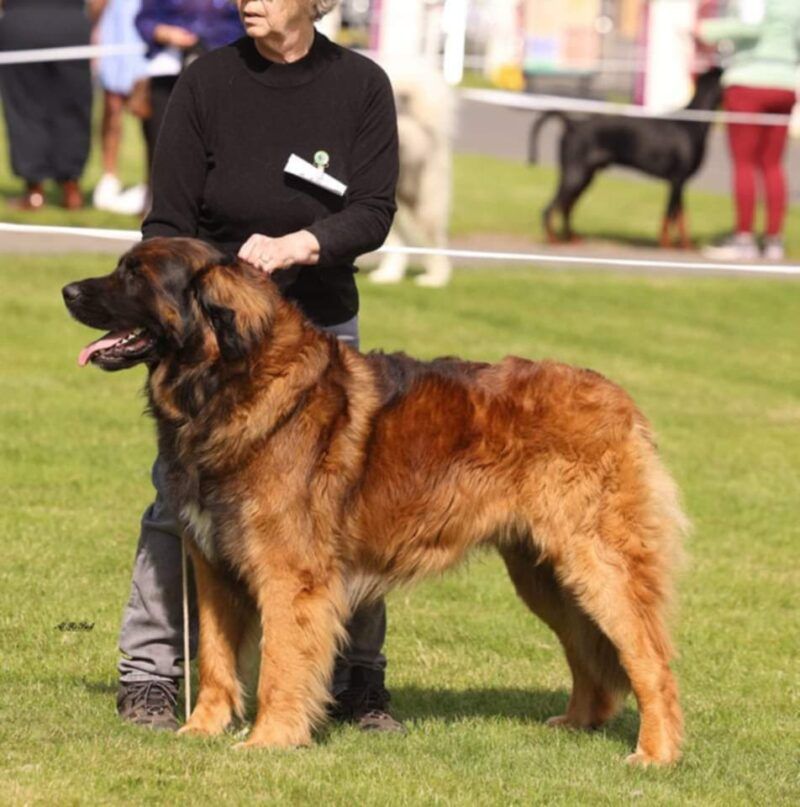
AMBER VITKENNEL CROMSON KING OLDHOLBANS
Sire: FOREST MAGIC NORDMAN
Dam: AJLIN BALTIC LEON’S
Hips/Elbows: 2:2/0
Eyes: Clear (16.10.24) HC Clear & G (0)
Other health tests: LPN 1&2 N/N ; LPPN3 D/N; LEMP N/N
Sarah Sevastopulo
Tel: 07707 788702
E-mail:oldholbans@hotmail.com
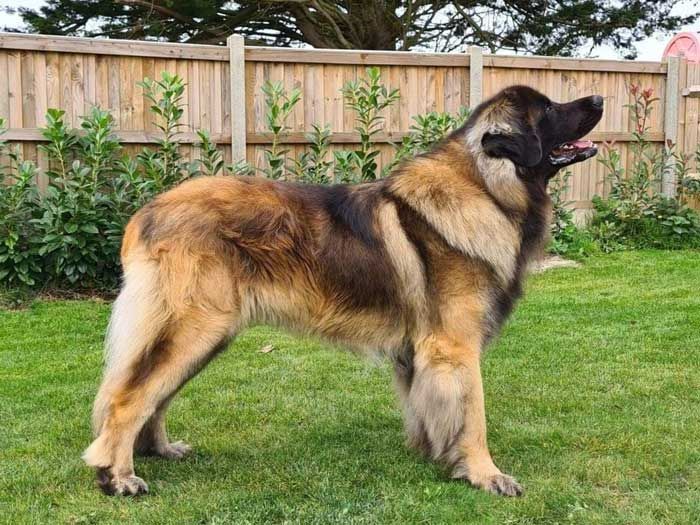
LEOHAYES WINTER SOLIDER
Sire: Lionscourt Griffon at Morwinas
Dam: Lendever’s Heavenly Amber
Hips/Elbows: 0/0
Eyes: Clear (23.12.23) HC Clear , G/PLA (0) – 1.9.2020
Other health tests: LPN 1&2 N/N ; LEMP N/N
MK 31.69%
COI 10 Generation 2.34%
Rachel
Tel: 07521 050195
E-mail: leohayesdogtraining@hotmail.com
If you would like your stud dog added to the register please contact the LCGB Club secretary and provide the necessary Hip, Elbow, Eye and LPN1 Gene Test paperwork to enable your stud to be added to the above list.
Please remember that it is the stud dog owners responsibility to keep eye certificates up-to-date and notify and provide the Secretary with copies of new certificates when they have been re-issued. If certificates are not received and kept up-to-date stud dog details will be removed from this above list until such time as a new certificate is received.