
Genetic-Diversity-and-Breeding
“Genetics diversity and the size of the gene pool are important factors in the health and long-term sustainability of a breed. If a gene pool is too small the chances of inherited genetic problems is greatly increased. We have provided links to useful articles,
presentations and videos below.”
Introduction
Genetics diversity and the size of the gene pool are important factors in the health and long-term sustainability of a breed. If a gene pool is too small the chances of inherited genetic problems is greatly increased.
We have provided links to useful articles, presentations and videos below.
Articles by Jerold S. Bell, DVM, Clinical Associate Professor of Genetics, Tufts Cummings School of Veterinary Medicine.
The Effects of Genetic Testing: Constructive or Destructive?
Download PDF.An article by Jerold S. Bell, DVM, Tufts Cummings School of Veterinary Medicine originally published in the June, 2001 issue of the AKC Gazette.
The Aspect Of Population Size On Healthy Breeding In Dog Breeds
Download PDFAn article by Jerold S. Bell, DVM, Cummings School of Veterinary Medicine at Tufts University, USA. This article originally appeared in the proceedings of the 2017 AKC Canine Health Foundation National Parent Club Canine Health Conference.
The Ins and Outs of Pedigree Analysis, Genetic Diversity, and Genetic Disease Control
Download PDFAn article by Jerold S. Bell, DVM, Cummings School of Veterinary Medicine at Tufts University, USA. This is an updated version of an article that originally appeared in the American Kennel Club Gazette in September 1992 entitled, “Getting What You Want From Your Breeding Program.”
Breeding Strategies for Managing Genetic Traits
Download PDFAn article by Jerold S. Bell, DVM, Clinical Associate Professor of Genetics, Tufts Cummings School of Veterinary Medicine.
Popular-Sire Syndrome: Keeping watch over health and quality issues in purebreds
Download PDFAn article by Jerold S. Bell, DVM, Clinical Associate Professor of Genetics, Tufts Cummings School of Veterinary Medicine which originally appeared in the “Healthy Dog” section of the August, 2004 AKC Gazette.
Removing the Stigma of Genetic Disease
Download PDFAn article by Jerold S. Bell, DVM, Tufts Cummings School of Veterinary Medicine, N. Grafton, MA adapted from an article published in the “Healthy Dog” section of the October, 2003 AKC Gazette.
Videos
View video Safeguarding Genetic Diversity in the Leonberger Breed
View AnimationA presentation by Pieter Oliehoek
The Benefits of Screening Tests
View AnimationA animated presentation by Sharon Springel.
Understanding the Shrinking Gene Pool in Pedigree Dogs
View AnimationA animated presentation by Sharon Springel.
infographics
Effective Population Size why numbers can be misleading
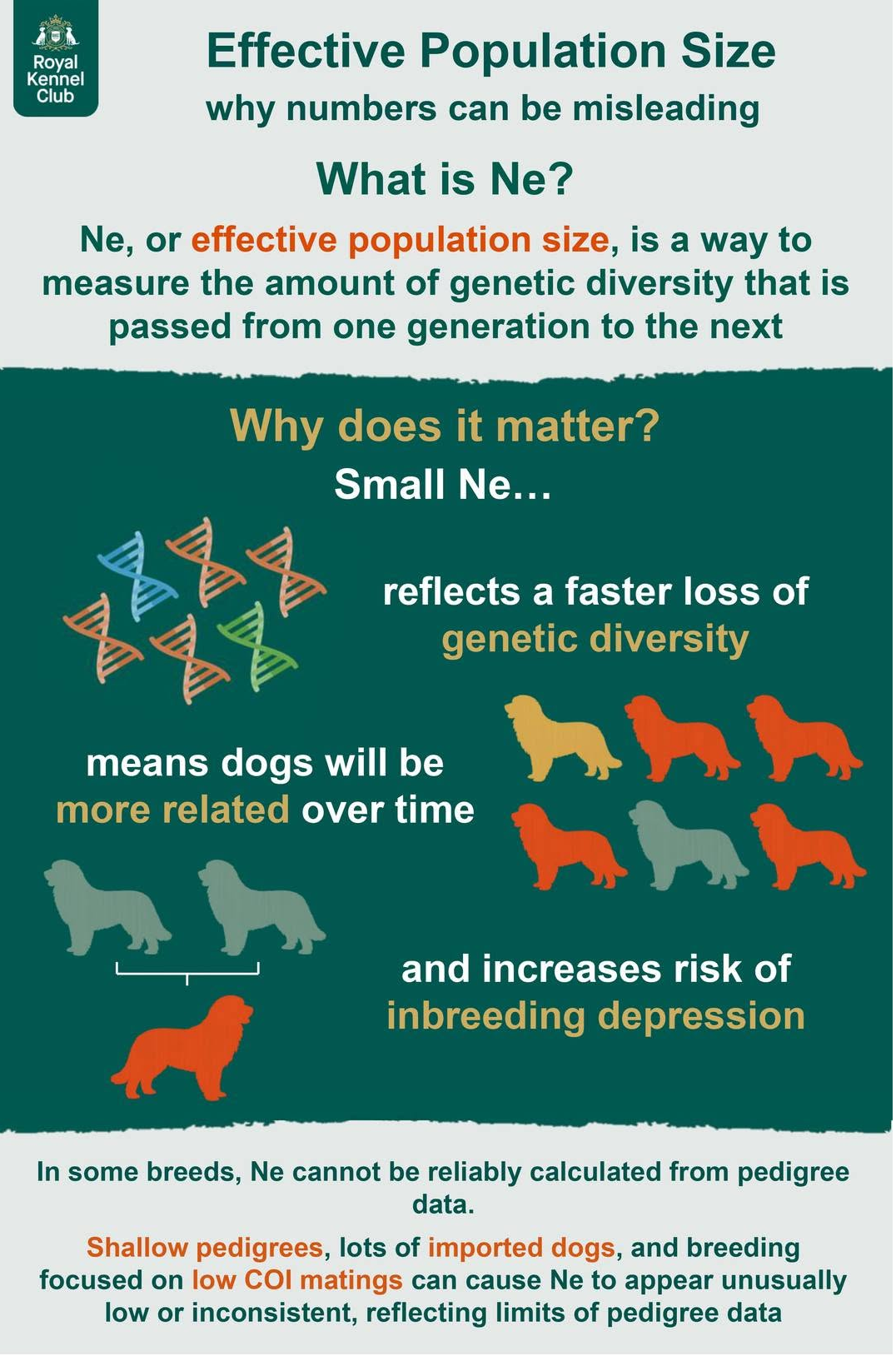
What is Ne? Ne, or effective population size, is a way to measure the amount of genetic diversity that is
passed from one generation to the next
Effective Population Size How does it work?
Ne depends on how many dogs are used, how evenly
they are used, and how related they are
Why diversity matters for selection
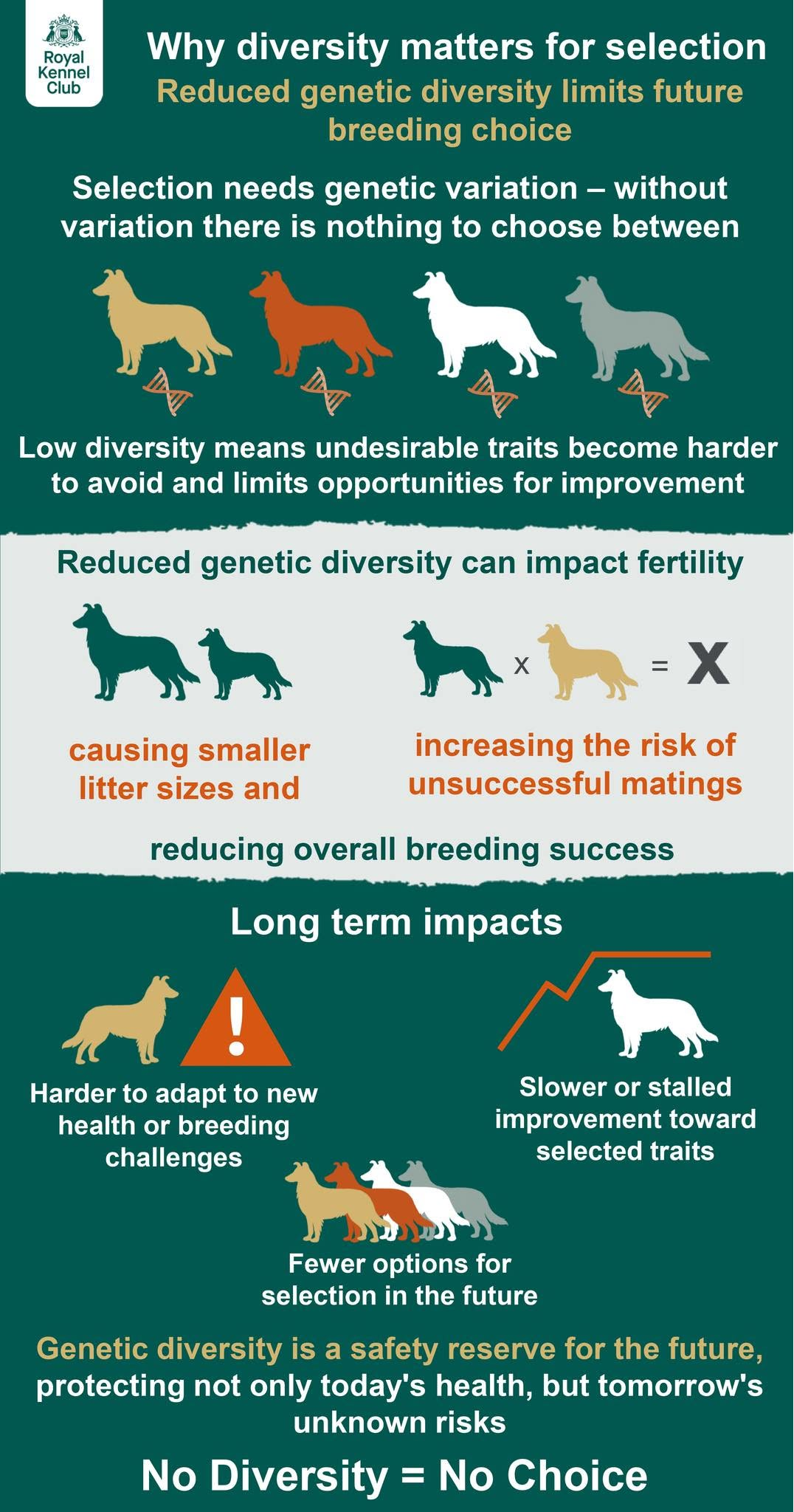
Reduced genetic diversity limits future
breeding choice Selection needs genetic variation - without
variation there is nothing to choose between
Genetic diversity Why it matters for your Breed
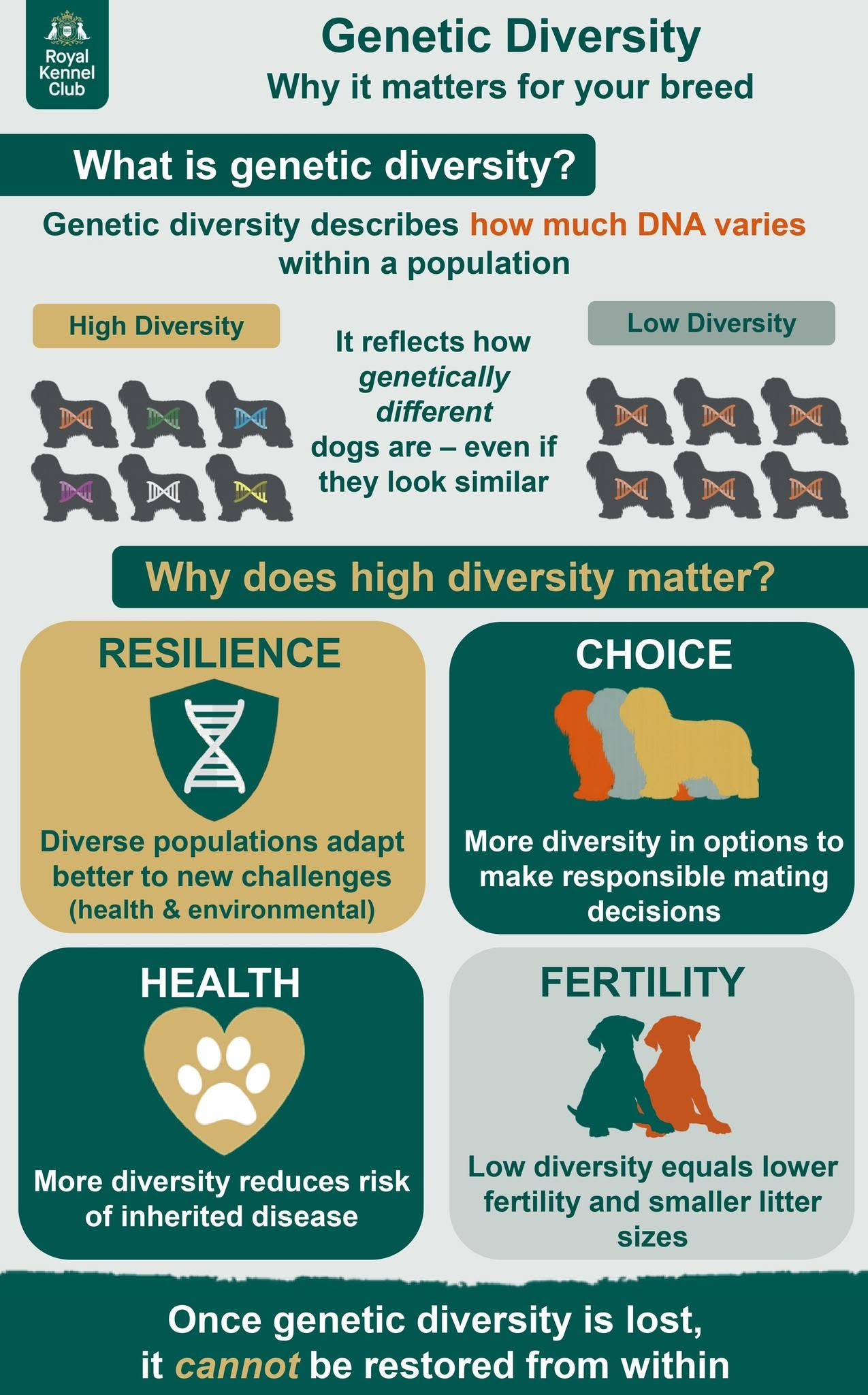
What is genetic diversity? Genetic diversity describes how much DNA varies
within a population
Genetic Variation
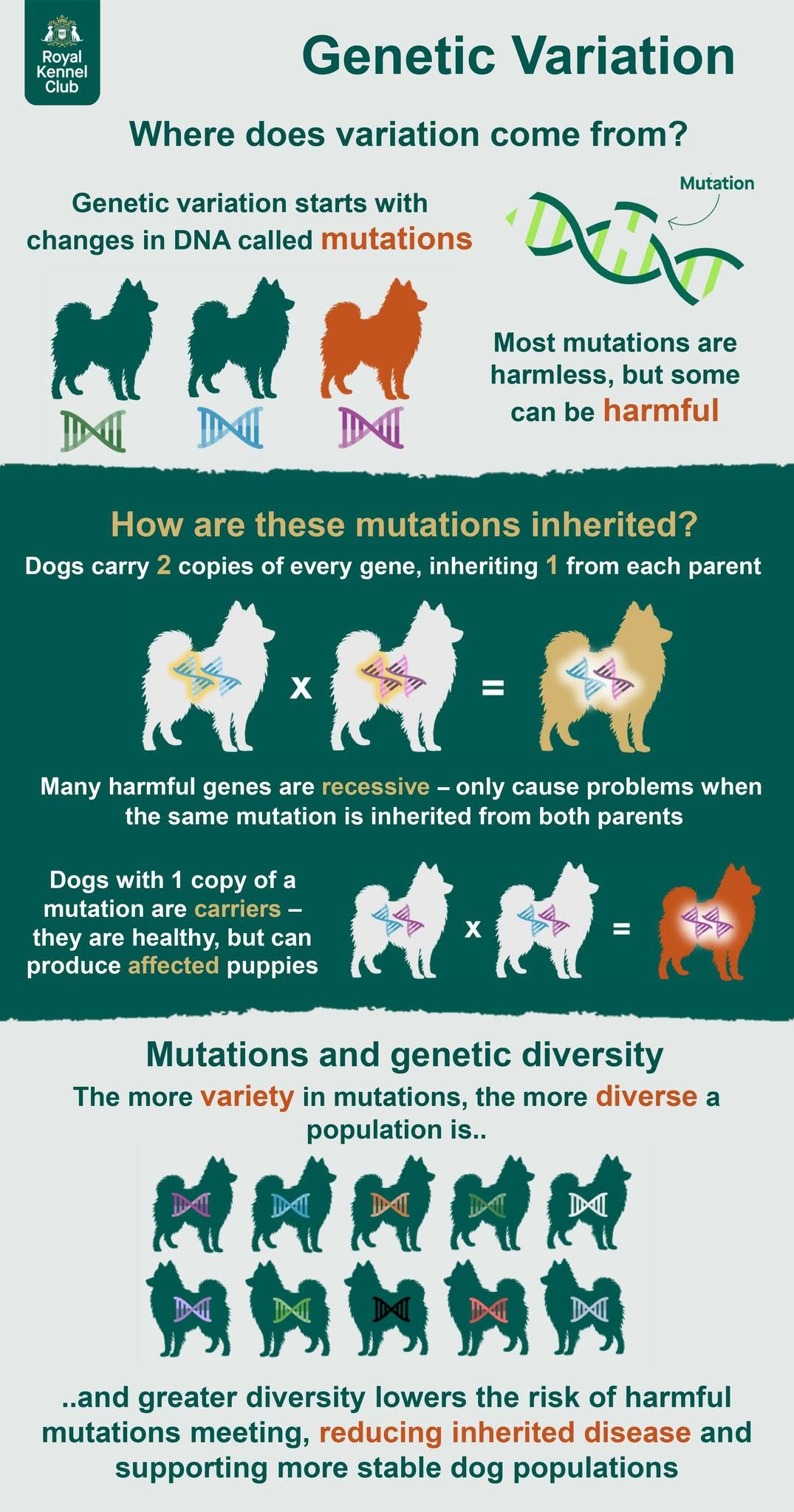
Where does variation come from?
Mutation Genetic variation starts with
changes in DNA called mutations
What is average relationship coefficient (AR)?
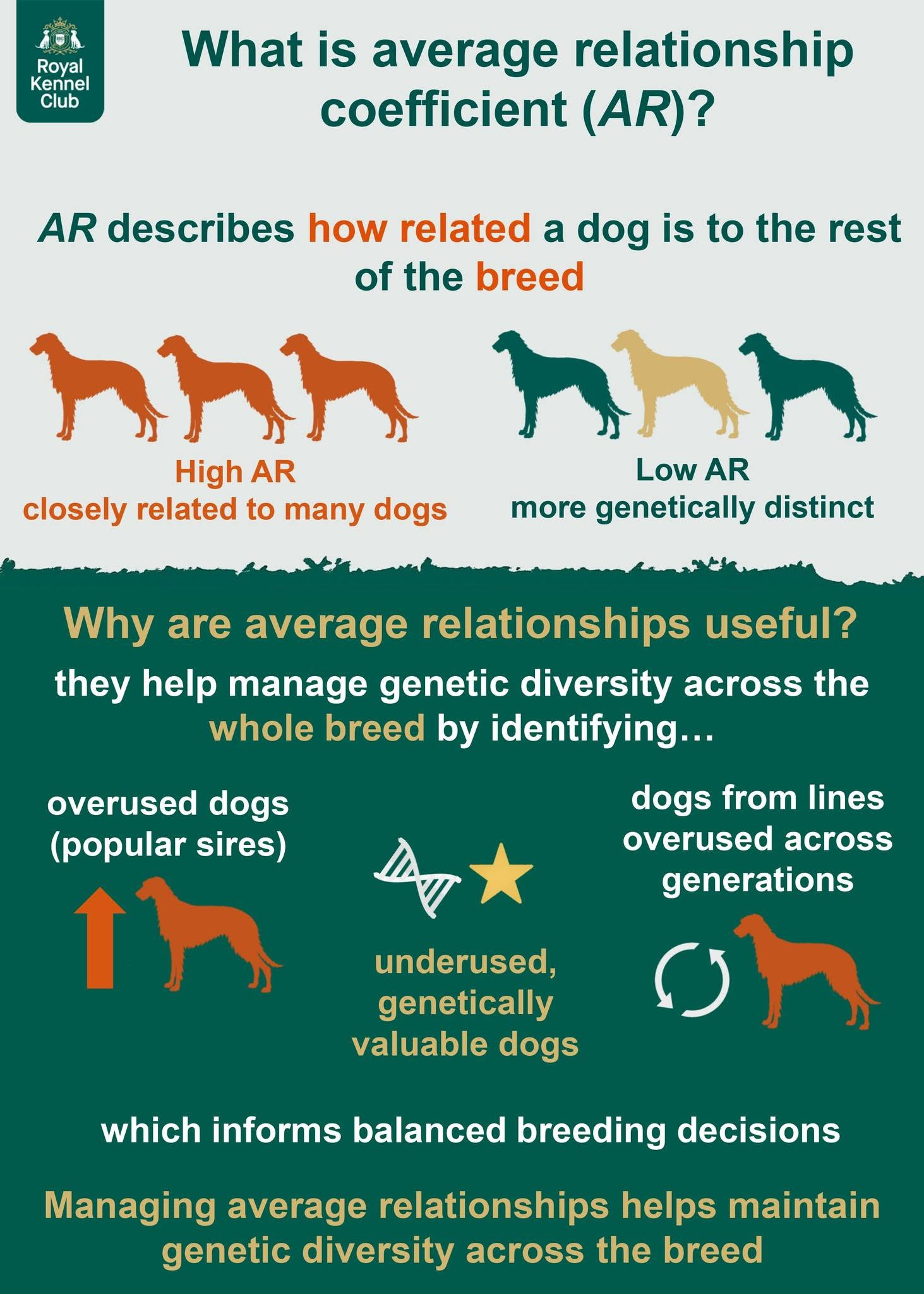
AR describes how related a dog is to the rest
of the breed
Genetic Diversity: How is it lost?
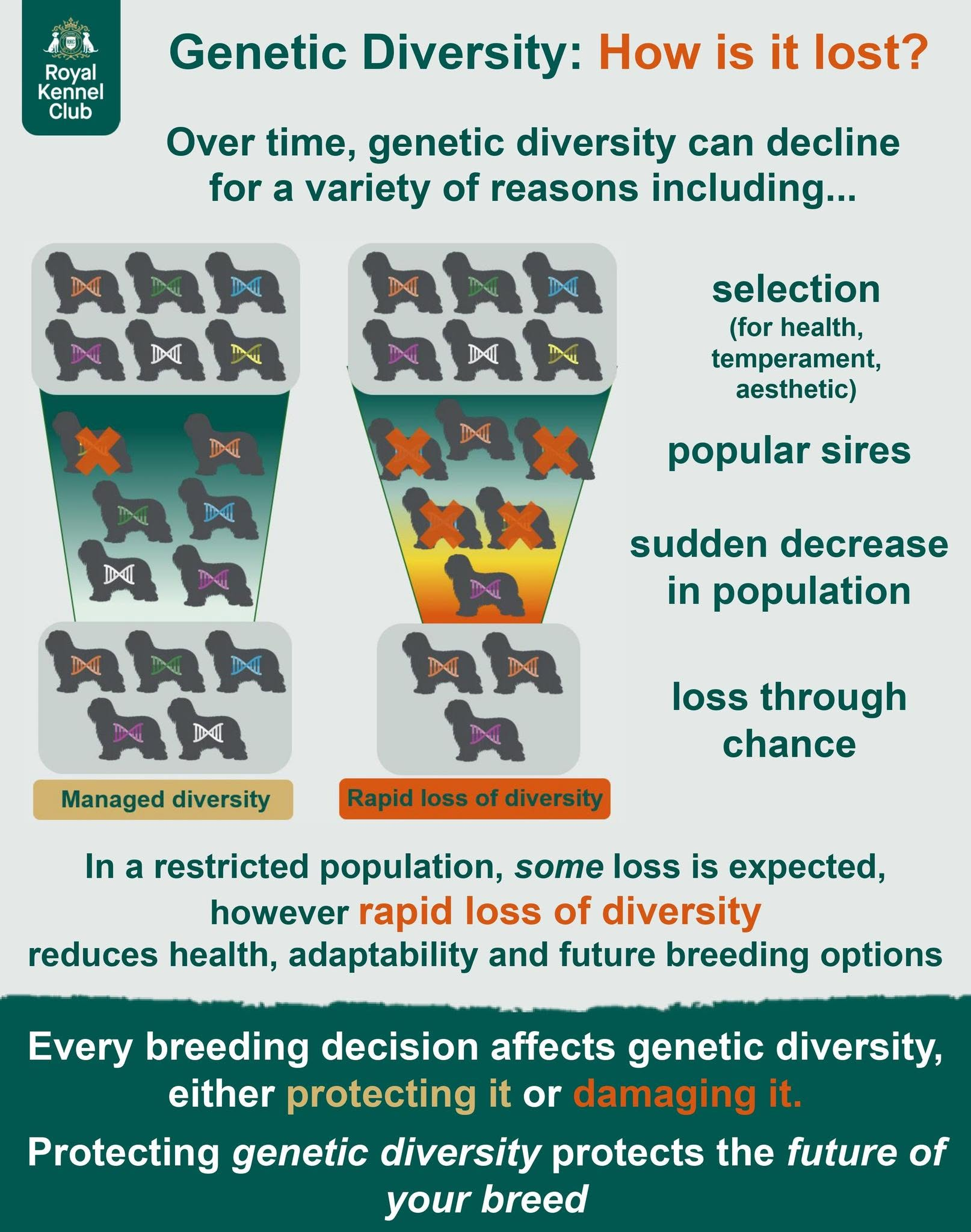
Over time, genetic diversity can decline
for a variety of reasons including...
Inbreeding
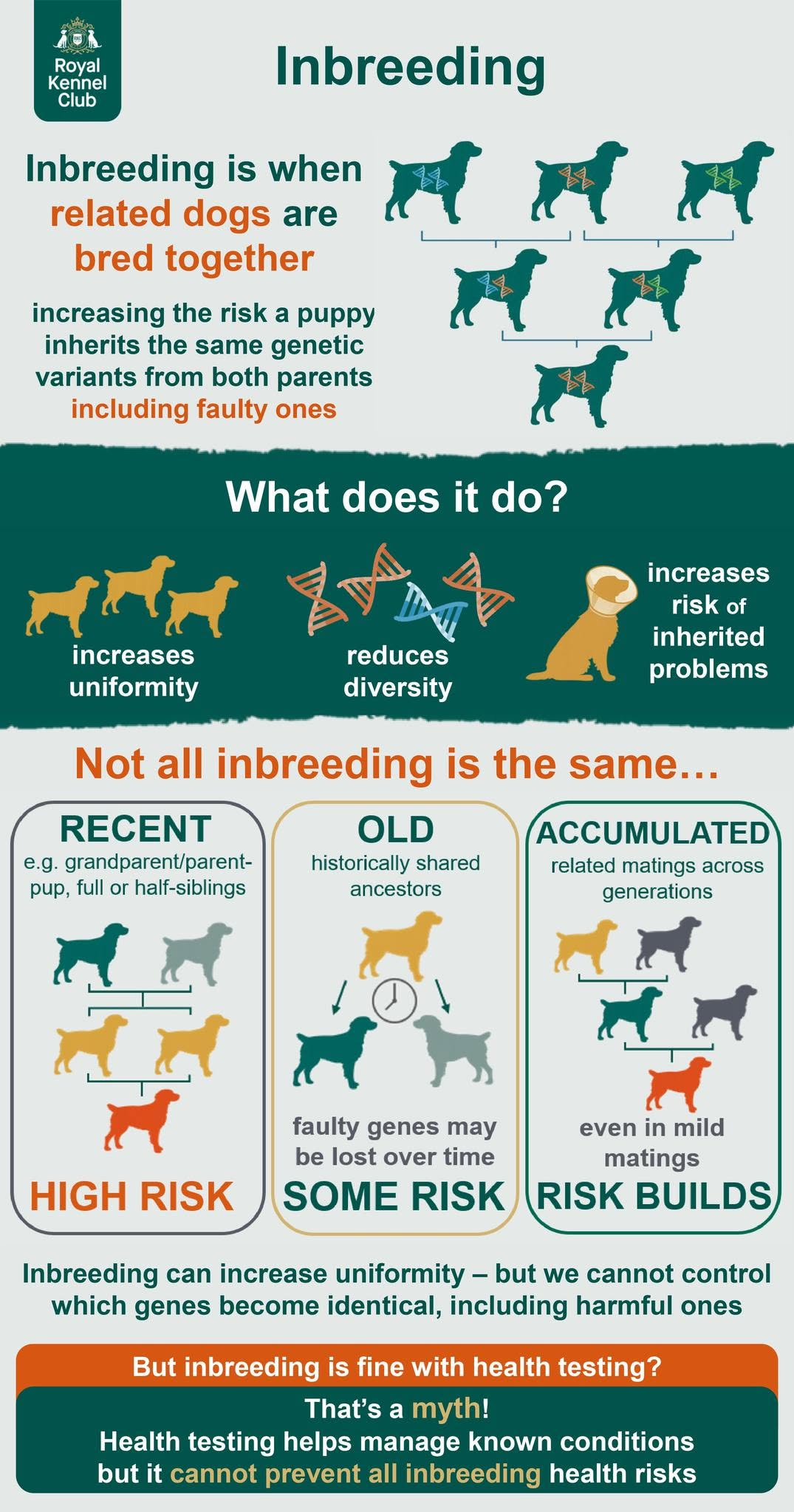
Inbreeding is when related dogs are
bred together increasing the risk a puppy inherits the same genetic variants from both parents
including faulty ones
Inbreeding Depression
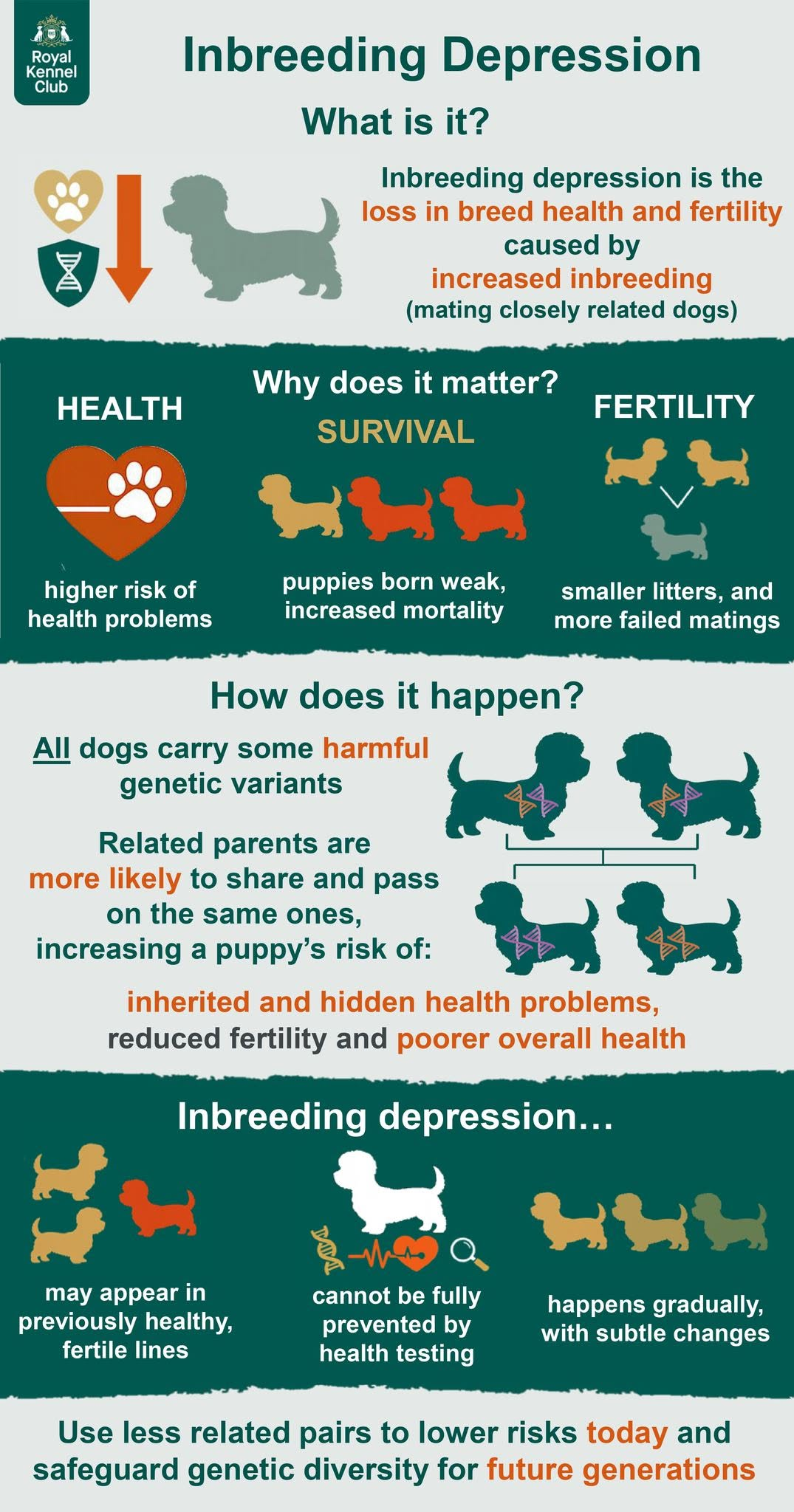
Inbreeding depression is the loss in breed health and fertility caused by increased inbreeding
(mating closely related dogs)
inbreeding is fine with health testing?
Inbreeding is when related dogs are
bred together increasing the risk a puppy inherits the same genetic variants from both parents
including faulty ones
MYTHBUSTING: "Popular sires are fine if they're 'healthy"
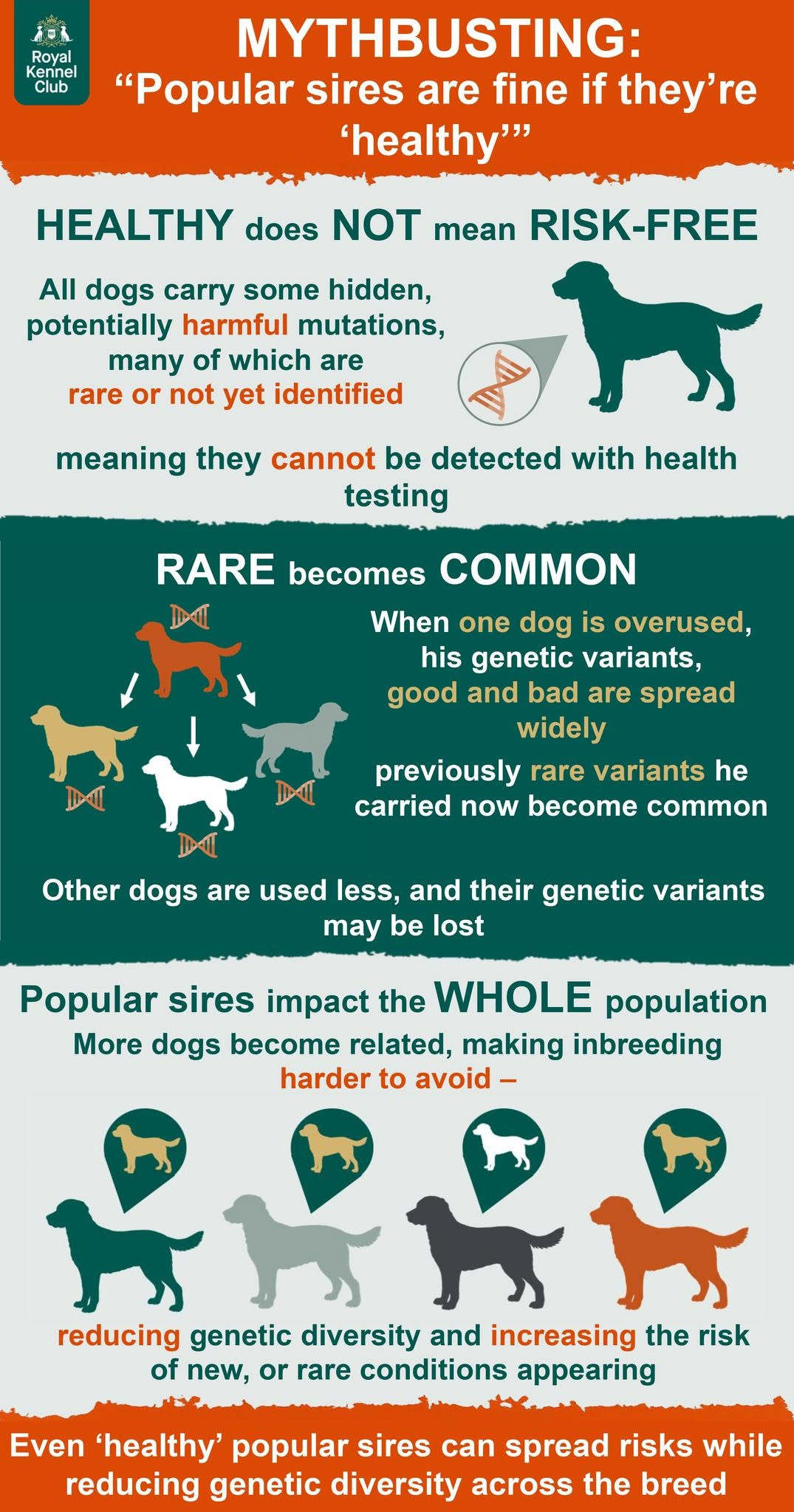
HEALTHY does NOT mean RISK-FREE All dogs carry some hidden, potentially harmful mutations, many of which are
rare or not yet identified meaning they cannot be detected with health testing
MYTHBUSTING: "Inbreeding is useful as it fixes type"
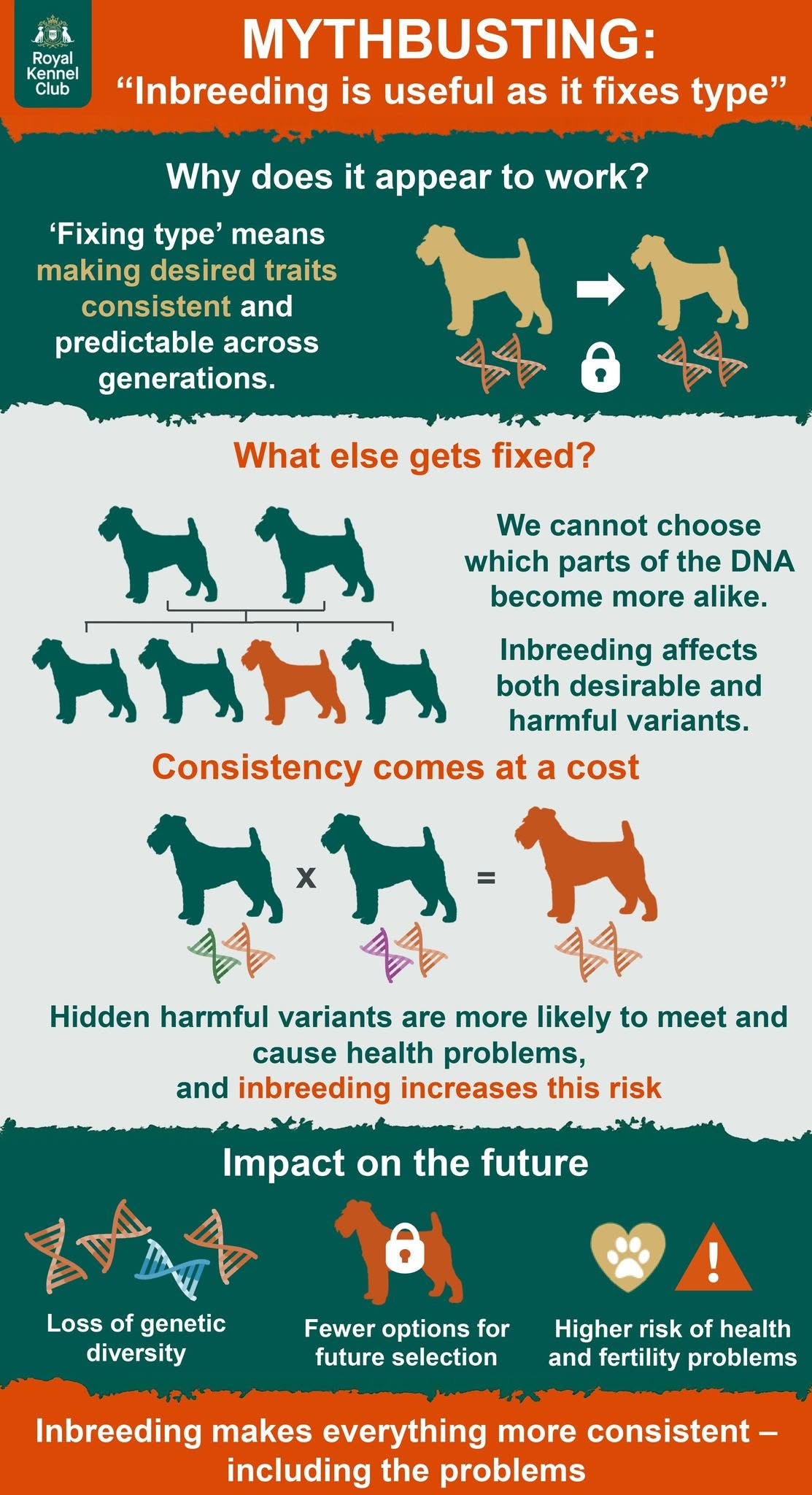
Why does it appear to work? 'Fixing type' means making desired traits consistent and predictable across
generations.
MYTHBUSTING: "Linebreeding is safe"
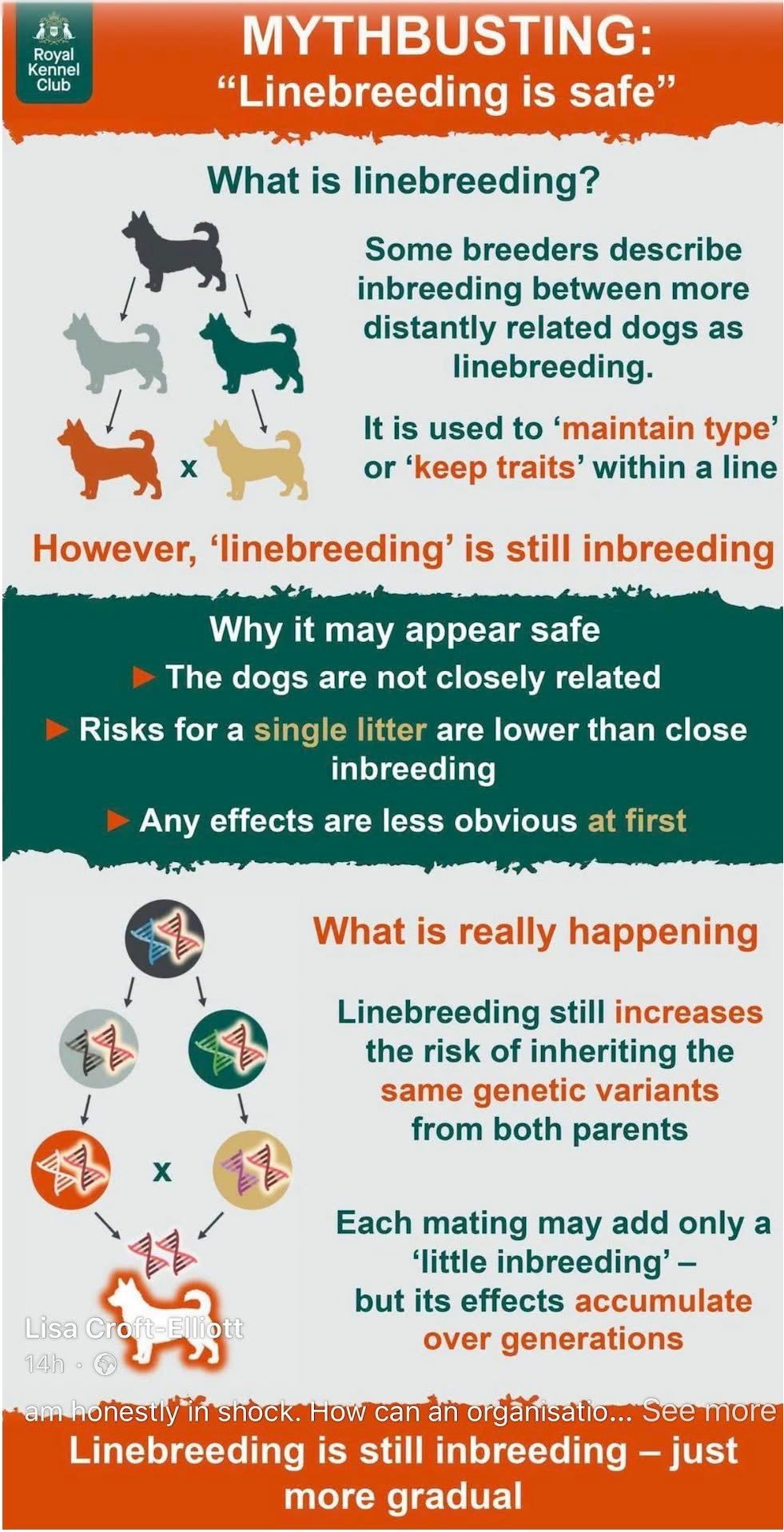
What is linebreeding? Some breeders describe inbreeding between more distantly related dogs as
linebreeding. It is used to 'maintain type'
or 'keep traits' within a line